
NXP BZV55-B12: Key Specifications and Application Circuit Design Considerations
The NXP BZV55-B12 is a popular Zener diode, part of the BZV55 series, designed for voltage regulation and protection in a wide array of electronic circuits. This component is characterized by its small SOD-80 (MiniMELF) surface-mount package, making it suitable for high-density PCB designs. Its primary function is to maintain a stable reference voltage by operating in the reverse breakdown region.
Key Specifications
Understanding the critical parameters of the BZV55-B12 is essential for effective circuit design.
Zener Voltage (Vz): The BZV55-B12 has a nominal Zener voltage of 12V at a specified test current. It is crucial to note that this voltage has a tolerance, typically ±5%, meaning the actual voltage can range between approximately 11.4V and 12.6V.
Power Dissipation (Ptot): This diode can dissipate up to 500 mW at a glass temperature of 50°C. This rating is fundamental for determining the maximum current the diode can handle without suffering thermal damage.
Test Current (Izt): The Zener voltage is specified at a test current (Izt) of 5 mA. This is the current at which the device is guaranteed to achieve its nominal Vz.
Dynamic Impedance (Zzt): The dynamic impedance is measured at the test current. A low Zener impedance is desirable as it indicates better voltage regulation under varying load conditions. For the BZV55-B12, this value is typically around 20 Ohms.
Reverse Leakage Current (Ir): This is the minimal current that flows through the diode when the reverse voltage is below the Zener voltage. It is a critical parameter for low-power applications.
Application Circuit Design Considerations
When integrating the BZV55-B12 into a design, several factors must be carefully considered to ensure reliability and performance.
1. Current Limiting Resistor (Rs) Calculation:
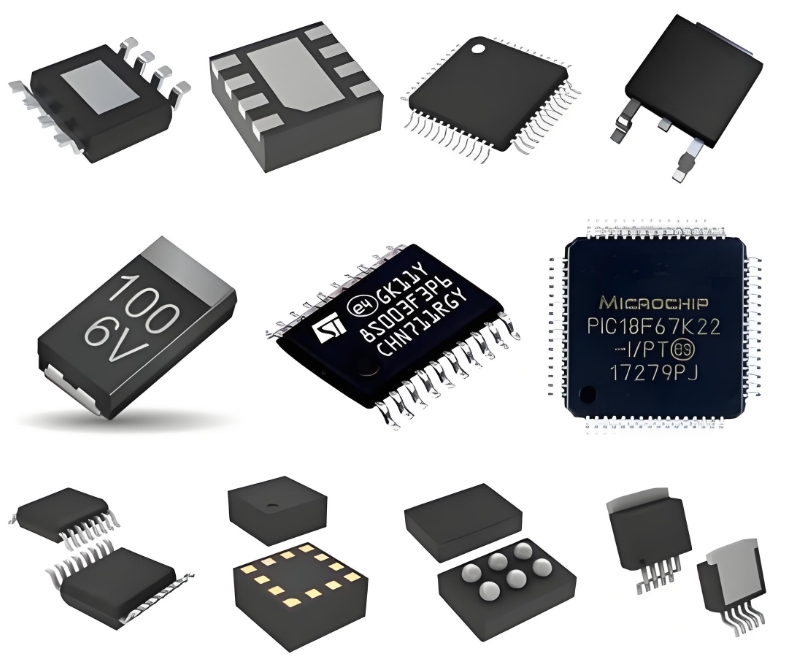
The most critical design step is selecting an appropriate series resistor (Rs). This resistor limits the current through the Zener diode to a safe level, preventing excessive power dissipation. The value is calculated based on the input voltage (Vin), the desired Zener voltage (Vz), and the total current required by the load (IL) and the Zener itself (Iz).
The formula is: Rs = (Vin - Vz) / (Iz + IL).
The power rating of Rs must also be calculated: Prs = (Vin - Vz)² / Rs.
2. Line and Load Regulation:
The ability of the circuit to maintain a stable output voltage despite changes in the input voltage (line regulation) or the load current (load regulation) is dependent on the Zener diode's dynamic impedance. For applications requiring higher precision, a low-Zener-impedance diode like the BZV55-B12 is preferred. For even better regulation, a dedicated voltage regulator IC may be necessary.
3. Temperature Dependence:
The Zener voltage has a temperature coefficient. For a 12V diode like the BZV55-B12, the temperature coefficient is typically positive. Designers must account for this drift if the circuit will operate over a wide temperature range. The power dissipation must be derated at higher ambient temperatures to stay within the device's safe operating area (SOA).
4. Noise Considerations:
Zener diodes, especially those above 5V, can generate significant avalanche noise. In noise-sensitive applications such as analog sensor interfaces or audio circuits, this noise can be detrimental. A large decoupling capacitor (e.g., 100nF) placed in parallel with the Zener can help suppress this noise.
5. Transient Protection:
A primary application of the BZV55-B12 is transient voltage suppression. It can be placed across the power supply rails of a sensitive IC to clamp any voltage spikes above its Vz, thereby protecting the component. In high-energy transient environments (e.g., ESD, inductive load switching), a dedicated TVS diode might be more robust.
ICGOO FIND: The NXP BZV55-B12 is a robust and versatile 12V voltage regulator and protector. Successful implementation hinges on meticulous calculation of the current-limiting resistor and a thorough understanding of its power dissipation limits and dynamic impedance. By carefully considering line/load regulation, temperature effects, and noise, designers can effectively leverage this component for voltage clamping and basic regulation tasks in power supplies and I/O protection circuits.
Keywords: Zener Diode, Voltage Regulation, Transient Voltage Suppression, Power Dissipation, Dynamic Impedance

